Projects
Jump To
Cooks Run
Learn about the history of the Cooks Run historic cabin and rearing pond.
Trout and Musky Project
View assessment of trout and muskellunge populations within the Upper Pain River Watershed.
Park Shelter
Learn about cordwood shelter located on the north side of the Paint River in Bates Township.
Dober Mine Project
Iron County Watershed Coalition Support Grant
Iron County Watershed Coalition Support Grant (PDF)
May 1, 2022 through December 31, 2023

NONPOINT SOURCE PROGRAM
Iron County Watershed Coalition
Iron River, Michigan
KEY PARTNERS:
- Dr. Al Johnson, Professor Emeritus, Michigan
Technological University Pisoni Land Surveying - JF Brennan Co.
- White Water Associates
- City of Caspian
- EGLE - Marquette Office, Water Resources Division
FUNDED BY:
EGLE Nonpoint Source Program - Watershed Council Grant Tracking Code #2022-0221
Grant Amount:
$40,000
PROJECT DESCRIPTION:
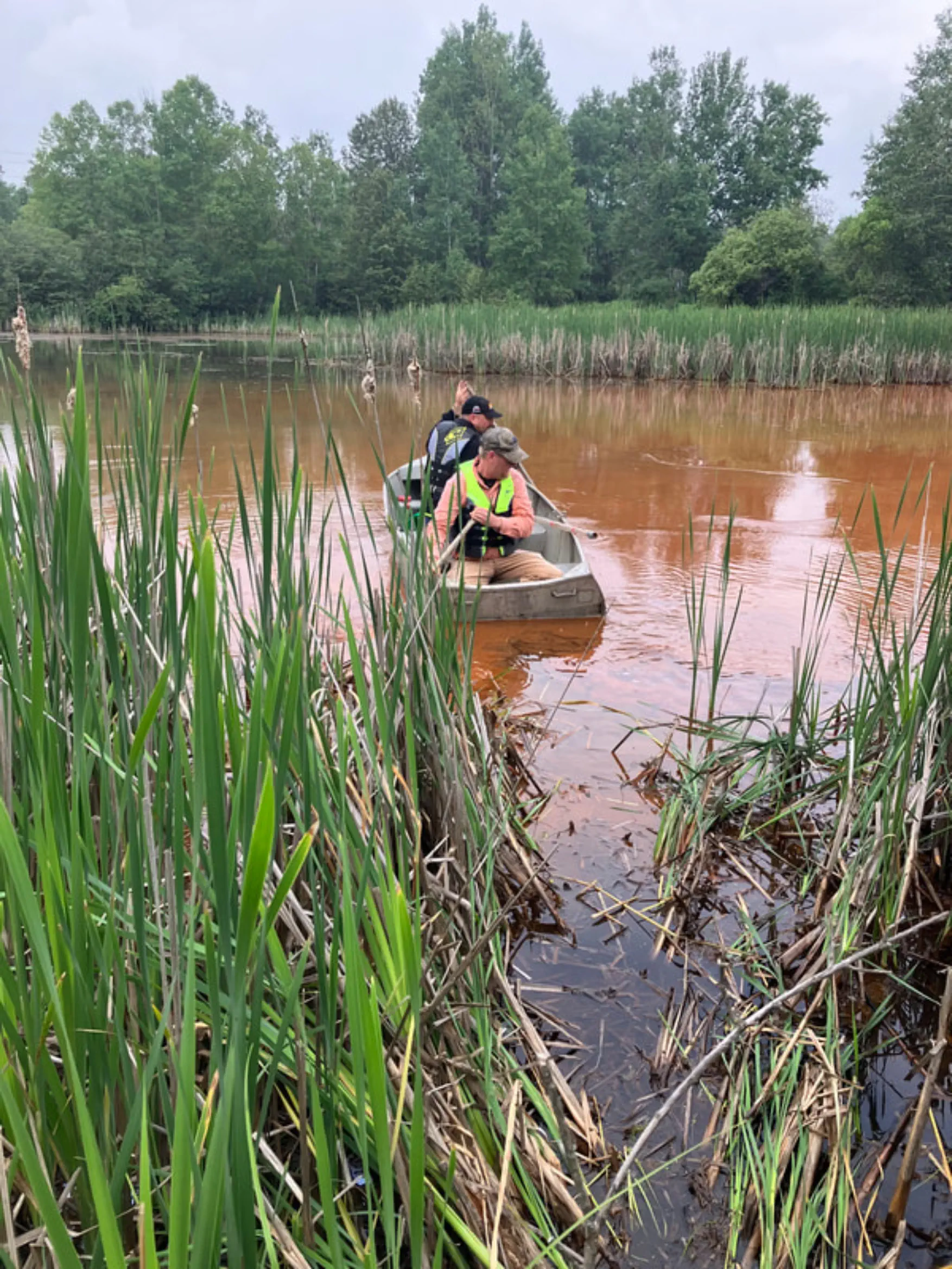
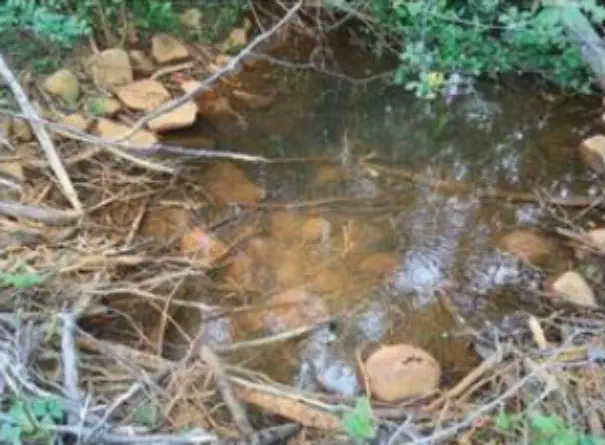
The Dober Mine Complex is located south of the City of Iron River, Michigan. It represents part of the environmental legacy left by iron mining in our region. Acid runoff, waste rock, and suspended solids contaminate the Iron River and destroy aquatic habitats. Studies and projects carried out by the State of Michigan since 1974 have significantly slowed this pollution with the development of a passive mitigation series of ponds that dilute, raise the pH and allow the settling of some suspended solids within the ponds before the mine water reaches the Iron River.
The Dober Mine Complex passive treatment system has gradually accumulated precipitate (iron oxide precipitation, or yellow boy) over the past 35 years, which reduces hydraulic retention time as well as treatment efficacy. This project provided information necessary to evaluate the current volume of iron precipitate in the system. The information gathered was used to develop a cost estimate for removal of sediment and restoration of passive treatment within the system. This is one potential plan to mitigate low pH and high iron water which discharges into the Iron River.

GRANT PRODUCTS:
Environmental monitoring that occurred:
- Surveyed and mapped the Dober ponds to determine the changes in the ponds from the time they were constructe
- Tested the sediments in the Dober Pond to determine amounts of heavy metals
- Measured the water to depths of 1200 feet in the Hiawatha Mine shaft to determine changes in water chemistry since previous measurements
- Measured and determined the volume of sediment/precipitate in the ponds
- Developed a plan and budget for potential dredging of ponds
OTHER INFORMATION:
The Hiawatha Mine is upslope of the Dober Pit and feeds water from underground into the Dober system. The Hiawatha shaft contains water down to depth of 1200 feet with neutral pH that could be pumped and discharged at the Hiawatha site. Pumping the neutral pH water could keep the water head levels low enough to no longer contribute water that would discharge from the Dober Pit. This along with closing the current Iron River water access pipe to the Dober Pit could then allow for no flow emanating from the Dober Pit thereby rendering the Dober Pond system and outflow inactive and no longer contributing water with low pH and high suspended solids and iron to the Iron River. This is another potential mitigation plan to consider.
WATERSHED AND COMMUNITY IMPACT
The Iron County Watershed Coalition (ICWC) has worked to restore the Iron River for the last 25 years. Their mission is to ensure the highest possible quality of waters in Iron County by educating and engaging our communities in projects that will restore and preserve our watersheds for future generations.
The water and land of this Dober Mine area creates safety hazards and wasteland for humans and all living things. The land and water degradation created by the abandoned mine systems have contributed to environmental injustice in parts of Iron County with higher concentrations of low-income residents. Iron precipitate from the mines contributes to pollution in the Iron River and beyond to the Brule River system. It is imperative that we continue to find ways to mitigate environmental degradation that has occurred as a result of historic iron mining in our region.
Wild River Crossing
Since the late 2000's the Iron County Watershed Coaltion has recognized the need to replace the culvert on the Iron River at the Wild River Road crossing, just north of US 2 west of Iron River. The inadequately sized culvert restricts Brook Trout passage and impacts morphology of approximately 1300 feet of river channel. Fast forward to the present, funding from more than ten partner organizations, along with support from the Iron County Road Commission have positioned this project to move forward with placement of a larger bottomless culvert in 2026 which will improve the quality and connectivity of stream habitats for priority species. The ICWC itself has pledged as much as $50,000 to this project, having completed the engineering design. Cost for removal and replacement of the culvert is estimated (in 2025) to be $1,201,024. Matching contributions from partners total $638,000; leaving $500,000 of funding to be procured for construction to begin in 2026.